
Steven Chun brings us thoughts on Daniel 7:1-28. Chapter 7 follows many stories we’re familiar with — Daniel’s fasting, the story of Shadrach, Meshach and Abednigo, Daniel in the lion’s den — but then suddenly the language changes to apocalyptic liturature. Like poetry — we can get lost in the specifics and miss out on what it’s trying to convey.
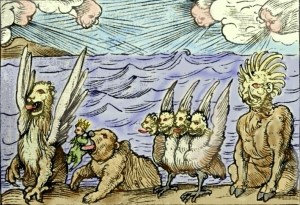
Steve takes us through the historical context of the passage: the Babylonian empire is about to fall. Exile and death are losing their grip. Empires — beasts of Daniel’s dream — rise out of the sea. Throughout the old testament, the sea represents disorder and chaos, something to be feared. Yet in vs. 9 and 10, divine action comes when God, the ancient one, takes the throne, bringing judgement to the beast, order to the chaos, and preparation for Shalom.
In vs. 13 a new character is introduced: one like the Son of man. This character receives the dominion that is taken from the empires. Though there are many interpretation of this character, it can be seen as a reference to the Exodus, where God comes as liberator to transform the people into a people of God.
So how does this apply to us? As a subversive literature, it can come as an invitation to see history from the perspective of the oppressed — those who must cling to hope. This sees God not as one who punishes through exile and conquering empires, as in the prophets — but as one who sits above empires and conquers them. This is a physical liberation to form a people no longer defined by oppression, but finding their identity in deliverance. The delivered community is freed from the tyranny of empires seeking to devour and consume, and systems that steal, kill and destroy.
We in our time should not be surprised when empires of today do not align with the values of God’s kingdom. This passage is an invitation to us to use our creativity, imagination and gifts to structure the chaos in our world with its broken systems and its longing for rest.
Steve closes with a beautiful reading from “This is the Face of the Reconquista” as an modern example of this spirit of restructuring chaos.
Hear in more detail here:
Image: Daniel’s vision of the four beasts woodcut by Hans Holbein, the younger, (c. 1497 – 1543).


 Pasadena Mennonite Church