
On our third Sunday in Advent, Tim addresses the traditional theme of joy in through the lens of Luke 3:7-18 — where John the Baptist teaches the crowds who have come out to the desert to learn how to prepare for the imminent coming of the Messiah. With humor, Tim contrasts his visit with his family to the Magic Kingdom’s Christmas celebration to John’s message of repentance — with John’s call for the people to bear fruit.
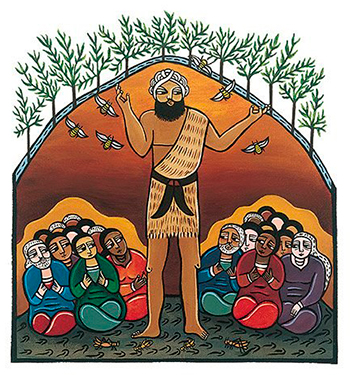
John doesn’t want his followers to simply rely on their identity as children of Abraham — he wants them to live out their identity. How might we as Christians of our own culture need to hear this message? The Israelites are being told that they do not have the right to sequester wealth, export violence, or strip away the resources of others for your own gain — thinking their wealth is in some way earned. The message is the same for us today. As Americans, we have often viewed ourselves as a chosen people — whether by God or by our own merit.
Tim references the news of the past week, where a 7-year-old girl from Honduras died in U.S. custody, after attempting to enter as an asylum seeker — escaping a situation that is at least partially the result of U.S. foreign policy. How do we think about a joy that engages with situations like these?
And so we encounter John. John tells us to repent, be baptised, and change the way we’re living. John doesn’t preach a joy that allows people to hide from injustice. And crowds of people are coming out to him in the desert to hear this message. They recognize the this is a message of hope — because for those on the margins and those who experience injustice — judgement is the hope of justice. This hope brings joy. The crowd wonder if this is the Messiah. They recognize this as a Christmas message.
This is not a joy that blinds us from the injustice that is happening around us. It is a joy that is found through the hope of God’s victory — God’s triumph over injustice. And our reconciliation with one another. Willie Jennings reminds us that this joy is a weapon against the forces of despair that seek to drown us in sorrow and apathy.
In Luke 7, after the messengers from John come to Jesus, Jesus asks a crowd why they went out to the desert — what they went out to see? They went to see a prophet who speaks Gods word, and tells of a hope that is to come, and the hope that we have now. Are we seeking a counterfeit joy? Or do we go in expectation — an expectation that changes the way we see the world around us? In advent, we live in an in-between time, as John did. John comes between a promise that has been given and a hope that is to come. He proclaims a new way of being in the world that is dependent on the promise that is sure and the hope that we know will be fulfilled. A world set right in justice and peace which is our cause for rejoicing.
In advent, we don’t simply remember something that has happened in the past, we remember that we are people in this time in-between. We stand on this side of a promise that we know to be sure. A promise of peace and justice in joy — made sure in Jesus’ victory — that changes the way we live now. We wait as Mary waited for the coming of Jesus — and praised God who lifts up the lowly, fills the hungry with food, and sends the rich away empty. We wait now for Jesus, living a hope that brings us to joy amid an unjust world. A joy that empowers us to confront this world as a people living into another way of being. This is an enduring joy.
We can learn together and from one another how to celebrate in ways that create new life and deconstructs the empires of fear, death, and perpetual war in a new life and new creativity. Joy is impractical. It shares.
What do we go out to the desert to see? Is it a peculiar and difficult joy? Is it a joy that we share with those in need? How do we share and practice joy?
Hear in more detail here:
Image: by Laura James


 Pasadena Mennonite Church