
On the 4th Sunday of Advent, Tim Reardon preached from Isaiah 7:10-16 and Matthew 1:18-25. “The day is dawning and we have hope in a savior, our brother, Jesus, the Messiah, our guide, true God, true light, who teaches the way of peace, who unfolds for us the mystery of God’s kingdom, that we may find healing and walk in God’s justice and joy.”
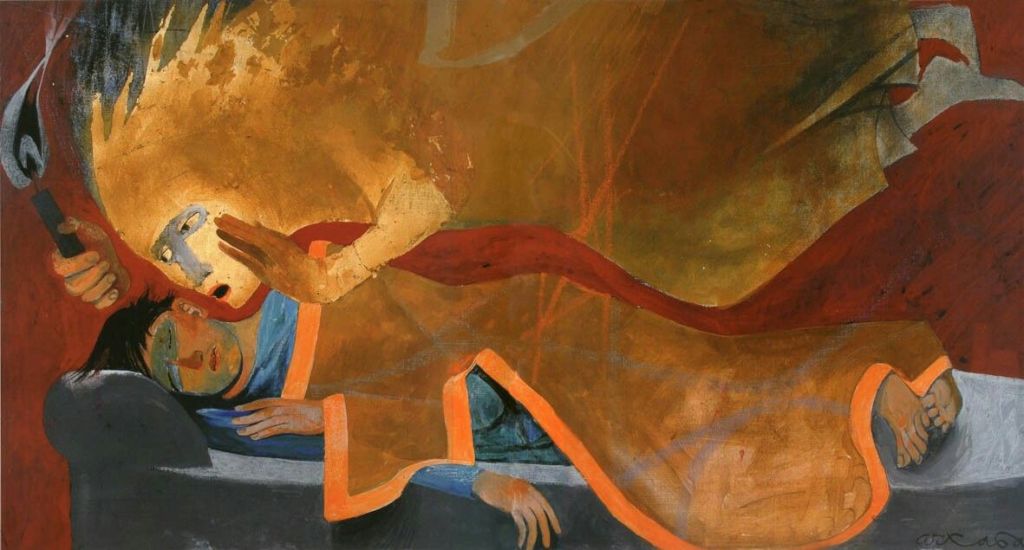
Tim continues, Advent is coming to a close, and amid the darkness of the night, and our moments of calling out to God, it is good and proper for us to rejoice, just as it is good and proper to mourn—and it is good for us to be present with each other in our joy and mourning. The virgin is with a child, a son, and they will call him, Emmanuel, God is with us.
“God is with us.” These are the words that the angel quotes to Joseph from the prophet Isaiah. The messenger declares “Joseph, David’s son, do not be afraid! Amid the messiness of life, this seeming moment of shame that you find yourself in, something full of joy is happening. Do not be afraid to take Mary as your wife, to raise this child with her, to protect and nurture the child together, for the Creator Spirit has brought about this child for the salvation of a people, and so you will call him Jesus.”
Jesus, Yeshua, Joshua—a name that means God saves. Let us not doubt that Matthew anticipates a Messiah that will liberate his people. He tells us a story of a people chosen through Abraham, covenanted with through David, yet exiled in Babylon, waiting, expecting restoration, and now Jesus is born during the reign of Herod, a Roman puppet king, and almost any Jew who heard this promise in the first century would expect a mighty warrior who would come and dish out God’s righteous judgment—to set the people free.
Yet, maybe the angel’s words make you bristle a bit, “he will save his people from their sins.” Shouldn’t it be that he will save his people from their enemies’ sins, from Babylon and Rome?
Like Mary who praises the God who brings the powerful down from their thrones, and lifts up the lowly, or Zechariah who says that the Messiah is coming to set the people free from the hands of their enemies. Still, even here this liberating act of God is not it, God doesn’t just liberate but he brings together a people who will live in justness and holiness, who learn to walk behind Jesus in the way of peace.
And this is the thing about Matthew’s Gospel, while certainly there is liberation and critique of Empire, Matthew is pointedly concerned about the creation of a people who live justly and do mercy, whose righteousness, as Jesus says in the Sermon on the Mount, exceeds that of the Scribes. Jesus comes to form a people freed from the bondage that destroys them, the greed, violence, division, shaming and the weight of shame wrongly applied.
We are captives to powers and principalities, governments, corporations, billionaires, systems, ideologies, shame, the unrealistic expectations of others, hurt, depression, I could not possibly provide a complete list, but, within and without, we are a captive people, those seeking to be a people, needing not only unshackling, but also healing.
And so I find it particularly interesting here that the word we use to translate “save,” is much broader in application, meaning not only “to save,” but also “to heal.” We who are captive to sin, our sins, and to others’ sins, we seek to be a healed people, and a people of healing. Here, in Matthew 1, we begin a story of God’s healing.
This is the first taste of Tim’s sermon from the 4th Sunday of Advent. Hear the rest of the sermon as we learn that that our shame bearing God has come to heal us.


 Pasadena Mennonite Church