
An Amish farmer, when asked to describe mutual aid, stated rather simply:
In the spring when I am plowing on the higher slopes of my farm, I can see six other church members plowing with their teams. I know that if I got sick or something, all six of those teams would be here plowing my field.[1]
In our moment, this reflection takes on special meaning for us, as we grapple with the prospect of sickness, loss of work and livelihood, and a host of other issues related to our current novel coronavirus reality. Perhaps, the vision for mutual aid is simpler for the Amish farmer in a closed community than it is for us Mennonites who find ourselves in a much different context, but the expectation of mutual care in the community should not be less.
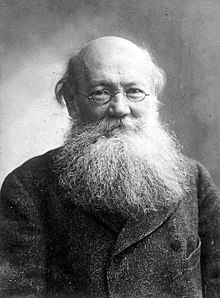
Recently, on the internet, in all the popular social spaces where the kids hang out these days, calls for mutual aid have popped up amid the recent pandemic, often citing Anarchist thinkers like Peter Kropotkin. Kropotkin called for local, direct action in networks of mutual responsibility and care, amid small and manageable groups where people can act creatively and in small ways within their means so that by everyone’s abundance we may address our needs as a whole. The idea behind mutual aid is to focus on that which is local and before us, taking on what we can, building visible networks of people who care for each other, not getting bogged down with top down change (not that that is not important) but building from the ground up and outside normal systems, affecting what we can change and meeting needs in little ways. This comes with the understanding that our large systems are often ill equipped or too concerned with powerful interests to address certain needs of smaller communities.

Mutual Aid societies are nothing new. They have been around for centuries, often developed among workers or communities outside of power-centers. They self-organize in non-hierarchical, not-for-profit, reciprocal ways, and though these groups can emphasize this structure differently, these organizations have a long history. Dorothy Day, for instance, was influenced by Kropotkin in her work with the Catholic Worker Movement.
Anabaptist communities, throughout our history, because of our strong emphasis on the community and mutual-membership as integral, not tangential, to the gospel, have practiced mutual aid as a central value, though it has been implemented in different ways. Some have emphasized a common fund, taking on the needs of each member as their own, others, such as the Hutterites, continue to emphasize “the community of goods,” the rejection of private property and the common ownership of all things—“holding all things in common” (Acts 2:44). You may or may not know that one of the organizations that combined to form what is now Everence was called “Mennonite Mutual Aid.” For Anabaptist communities, mutual aid is not an occasional occurrence, but a mode of being (or ideally should be).
This is reflected in Article 21 of the Confession of Faith in a Mennonite Perspective:
“As stewards of money and possessions, we are to live simply, practice mutual aid within the church, uphold economic justice, and give generously and cheerfully.”
What Is Mutual Aid?
Mutual aid is sometimes understood quite broadly as general charity, but mutual aid is not an individual virtue; it is communal. It is not what an individual does, but what we do and are together. This is clear given the word “mutual” in its name, signifying a communal reliance, care, and trust. Mutual aid is not something that you practice, but something we practice, stemming from a strong understanding of community as participating in the new society of God, and it is a way to act locally and in impactful ways outside of the systems (or if you prefer, the powers and principalities).
This is not to downplay the importance of giving and charity as a central element of discipleship. Charity is our responsibility to all, to act in generosity and in love to all, to strive for relationships of justice throughout the world and locally. Charity is important for us in this moment as we partner with and learn from those most affected by the Covid-19 outbreak, seeking to be part of a systemic solidarity that seeks true peace, justness, and joy for all. Emphasizing mutual aid is not an excuse to ignore the outside world, but the community shaped by mutual aid, that seeks to live as the new society, is shaped to live in the world in generosity, solidarity, and care.
Additionally, there is nothing to say that you cannot exist in multiple local communities of care, in fact, we should. It is simply that the character of the mutual commitment of the church defines us and our participation in eternal homes in the present.
So, with all of that, there are a few things that we can highlight about mutual aid in the body of Christ:
The Visible Community
That is, mutual aid emphasizes the social body (not the individual) and the belonging to one another of those who make a mutual covenant commitment to one another. The visible community is where we practice and embody our dependence on one another and the abundance of God. Mutual aid in Anabaptist communities emerges as the direct result of a strong theology of membership and the community, that we, together, are the church, not in our commitment to an institution, or in our individual commitments to God, but in our commitment to one another. We are not members of an organization, but members of each other. Mutual Aid requires not one person declaring giving, but a community of people who join together with a common ethic, a common purpose, and a common body caring for each of its members, its eyes, nose, feet, bellybuttons, fingernails, whatever part y’all might be (1 Cor 12).
And So… Mutuality and Reciprocality (which is probably a word)
So, then, mutual aid means reciprocity. It is out of this trust and reciprocity that we learn in increasing ways (and this is hard for us in so many things, and we are learning) to put our trust in each other in our moments of need, so that we all might experience God’s abundance. So Paul, for instance, writes to the Christians in Corinth to contribute out of their abundance to the church in Jerusalem in their need:
I do not mean that there should be relief for others and pressure on you, but it is a question of a fair balance between your present abundance and their need, so that their abundance may be for your need, in order that there may be a fair balance. As it is written, “The one who had much did not have too much, and the one who had little did not have too little.”
2 Cor 8:13-15
Real Tangible Aid
Mutual Aid is not simply prayer, but physical and material. It is caring for the financial, physical, and material needs of the people that you have made a covenant with. It can include labor, service, goods, payments, rent, groceries… toilet paper (seriously y’all, we’re getting low)… Both spontaneous giving and organized actions on a local level.
This is reflected in our common commitment note in the PMC Membership Document:
Membership, made alive in baptism, binds each member to the other in covenant community, with the responsibility and privilege to love and nurture one another in our common journey with Jesus. Covenant members commit to care for one another in our physical, social, emotional, economic, and spiritual needs.”
All Things Belong to God
Further, our commitment to each other, to share our resources, is built on an understanding that these resources are not ours, they belong to God. To an extent this should raise serious questions about the way American society and other countries across the world have built up conceptions of private property in order to commodify and utilize resources in the market (really turning everything into a market) and for the sequestering of the world’s wealth (a decidedly anti-abundance and anti-all-things-belong-to-God attitude!). In the PMC Covenant of Faith we agree:

WE recognize God as the owner of our lives and resources, and will practice proportionate giving from our resources. We seek to be wise stewards of time, talents, and material resources to assist one another in the fellowship and to minister to a needy world.
A Psalm of central importance for Anabaptists has been Ps 24:1:
The earth is the Lord’s and all that is in it,
the world, and those who live in it.
Indeed, those radical Anabaptists used this Psalm as justification for defying property claims and borders. It is this Psalm that we hear echoing behind Jesus’s words in the temple to give all things that belong to Caesar to Caesar and all things that belong to God to God. But all things are God’s! It is the systems of exchange perhaps, turning everything that belongs to God into a commodity, these things that belong to Caesar (let him have that), or at least the Caesars of our day. Perhaps these words of Jesus critique not only the “state” power and authority of Caesar, but they also sow the seed for a critique of the modern systems of privatization that facilitate all things being turned into market resources and the sequestering of the abundance of God in the hands of a few.
And so mutual aid involves community, it involves mutual and reciprocal responsibility and trust, it involves real tangible aid (not simply thoughts and prayers… though I do appreciate your thoughts and prayers as well), and for us it requires a reevaluation of our relationship to the world and things, knowing that all good gifts come from God, for us to share and to practice God’s abundance together. This mutual aid should not cut us off from the world, but prepare us in God’s abundance to seek God’s justice, peace, and joy within the world.
That Prime Example of Mutual Aid: Acts 2
Of the many texts that can be cited to support mutual aid, it is the example that we have from Acts 2 (and 4) of the early community living in koinonia that is perhaps the most often referenced. [You can find that text here, Acts 2:37-47.]
Not surprisingly, this early community has a strong theology of, well… community.
The early Jerusalem community is formed on the heels of baptism. Their baptism is an entrance into a new community, a new society living in the world in a different way and in mutual care. We learn right away that this community’s response to hearing the message concerning Jesus and baptism was not primarily philosophizing but living. They devoted themselves to these new teachings, to fellowship, the breaking of bread, and prayer.
This new community assembled around common life, immersing themselves in this new teaching, worship, and perhaps most radically, some serious sharing of material resources. Members of the community sold their possessions in order to redistribute the proceeds to all who had need. We learn in Acts 4:34-35 that “there was not a needy person among them, for as many as owned lands or houses sold them and brought the proceeds of what was sold. They laid it at the apostles’ feet and it was distributed to each as any had need.”
This is the community of the Spirit. Notably, in 2:47, we learn that this community, filled with and connected by the Spirit, is not simply waiting to be saved in some by and by, but that those being added to the community were “being saved,” in the present, participating in the new society of eternal life now that will come to a head when Jesus puts all powers, principalities, authorities, and lordships under his feet, abolishing injustice in favor of peace—a peace sourced in God’s all-encompassing love, and Jesus’s life, death, resurrection.
Maybe simplistically, but I think rightly, Anabaptists and their descendants have sought to find ways back to embodying this community of the Spirit, and really forward to the new society that will become all in all, a reality confirmed and determined in the resurrection, the victory over every power that thinks to structure the world. This community is what animates the value of mutual aid.
What Can We Do?
In the first place, it is important that we rely on the creativity of one another. That is the point of mutual aid, coming up with solutions for each other in the particularity of the realities we encounter. So, you all are tasked with being people of mutual aid with this mindset of sharing God’s abundance. Still, practically, here is where we can start:
1) Share your needs: We cannot know what the community needs, especially as we are socially isolated (making mutual aid tricky), unless we share with each other our needs. Leadership is talking about ways to maintain contact with everyone and getting an assessment of community needs. But, if you have a need, share it. Share it with your community group (or tell us you want to be part of a small group that meets virtually for prayer and support), share it with the prayer team (prayer@pasadenamennonite.org), and especially share it with leadership, staff, and LT (tim@pasadenamennonite.org; mreardon@pasadenamennonite.org).
2) Everence: Everence, the sequel to Mennonite Mutual Aid, has increased the amounts of its matching giving, so up to a certain amount we can match our care fund. We want to use this matching fund to help with community need… so, again, please share those needs with leadership.
3) Physical Distancing Resource List: Melissa Spolar sent this out to the community on Monday. Find it in your email and fill it out. We will certainly have service needs in the community. There are those at higher risk that need help shopping, perhaps those who will get sick that will need the same. What ways can we mutually serve one another? Let’s be creative.
4) Stimulus Checks: Now, I want to lead into the big one. Put your money where your mouth is, or where your stated commitment to the community is. Let us share the abundance, or as Luke puts it in Luke 16, use your unjust mammon to build eternal homes. Are you maintaining employment and not seeing a significant dip in income, but you are receiving a check? Are you seeing a small dip an income, but you will be OK? Share your check with the common fund so that we can care for each other’s needs out of this fund. Share with us in mutual aid. [The nature of the stimulus as an “advanced refundable tax credit” means that we will also have to delve into the complexities of how that will function as well.]
This aid can extend to our community. We will take care of each other’s needs in God’s abundance. We can extend this to our fellow siblings in PSMC churches that most certainly have need, and with whom we share a common relationship, or to those we have established connections with that we know will have needs more locally (while this later extends beyond mutual aid, it extends from our formation as a people of mutual care–more below).
Additionally, not only the “middle” should share the burden: Many of us will not get a check because we fall outside that income bracket. If you make too much money to get a stimulus check, consider giving anyway, as those of us who make more should be expected to have more responsibility in this care. May this be an opportunity to participate in some Jubilee!
As Paul says in the passage cited above, so that “The one who had much did not have too much, and the one who had little did not have too little.”
Let us not stop with mutual aid: Where there are needs that extend beyond our community, we can share these funds with those communities that are certainly being more impacted by the Covid closures, such as immigrant communities and people that we have developed real relationships with already who are undocumented and hurting now. We have a list of people we would like to help in this situation that we all know and have been in support of already. Let us use these resources for them as well.
We know that Covid-19 has not impacted us all the same. It has been said by some that the novel coronavirus does not know race or class. That is not really true. Or, perhaps, the failed systems that are incapable of caring for the needs of the people entrusted to them, do in fact discriminate and we know that this current crisis is disproportionately impacting those to whom Jesus declared to be the inheritors of the kin-dom, those who are considered less desirable by a corrupt value system, the poor, the immigrant, the incarcerated, the elderly, those who are mentally disabled. We must take this seriously.
So, let us learn together this shared value of mutual aid in real practice. The most important step, to begin with, is to let us know your needs. If we do not know of the needs that need to be met, we cannot meet them. Creativity and local care are the name of the game. We are a community that cares about each other, and I know we are a community that supports each other when we are in need. But let us use this opportunity where we stimulate God’s abundance and Jubilee for those most in need. May we be that new society within and without.
[1] Building Communities of Compassion: Mennonite Mutual Aid in Theory and Practice, edited by Willard Swartley and Donald Kraybill, p. 13


 Pasadena Mennonite Church